
A few years ago, breathwork lived on the fringes of wellness, a niche practice reserved for yoga studios, mindfulness retreats, and the occasional Wim Hof devotee. Now? You can’t walk into a gym, open a meditation app, or scroll TikTok without someone telling you to “just breathe.”
But something deeper is happening beneath the trend.
Breath isn’t just a tool for calming the nervous system anymore… it’s becoming data. Breath has quietly become one of the most talked-about “new” tools in health. Except… it isn’t new at all.
Breath, the most rhythmic, revealing sign the human body produces, is being rediscovered as a biomarker. And this time, it’s not confined to a clinic or a meditation class. It’s being rebuilt for the age of personal health and fitness intelligence.
As I’ve been tracking the signals, a pattern has emerged: breath is no longer a single metric or a single device category. It’s becoming a multi-layered and multi-modal biomarker that can be continuously and non-invasively tracked.
Remember the respirometer, that clunky hospital device used to measure lung function. Well, it is quietly being reinvented for the mainstream in the form of smart, mobile and wearable devices.
We’re entering the era of the Breath Intelligence Movement.
What are the signals that tell us this?
- The ear is turning into a respiratory sensor.
- The smartphone is transforming into a home lung lab.
- AI is learning the “language” of breathing and coughing.
- And breath chemistry, once a fringe research field, is edging toward mainstream diagnostics.
Individually, each signal is interesting. Together, they point to a future where breath is one of the richest, most actionable data streams in personal health.
Lumen, a company that was an early mover in breath intelligence, designed a handheld device for detecting fuel consumption by exhaled breath to offer metabolic lifestyle insights and coaching. This is just the beginning and the signals are pointing towards a future where ‘breath health’ could become the next trending category, similar to the scale of ‘gut health’.
What Trends Are Driving Breath Biomarker Tech?
Breaths’ popularity can be determined by the fact it sit’s at an intersection of wellness, fitness and respiratory health. A combination of:
- stigma reduction towards improving mental health through meditative breathwork,
- the correlation between lung capacity and fitness,
- COVID driving fear for respiratory illnesses has certainly accelerated consumers obsession with how we breath and what our breath can tell us.
But there are other micro trends at play:
1. Breathwork Made People Pay Attention and Now They Want Data
Breathwork’s explosion into gyms, apps and therapy rooms has done something powerful: it made consumers aware of their breath for the first time. The next natural step? Turning subjective breath awareness into objective breath intelligence. People don’t just want guidance, they want personalised insight, progress metrics and real-time biofeedback.
2. The Search for New, Passive, Meaningful Biomarkers
Wearables have reached a saturation in terms of we’ve measured the ‘easy things’, particularly biomarkers that can be derived from heart rate, fitness tracking and sleep. Now consumers and clinicians want signals that go deeper, biomarkers that reflect stress load, respiratory function, metabolic demand, sleep stability, illness onset and recovery capacity. Breath is one of the few biomarkers that can speak to all of those domains.
3. The Shift Toward Ambient, Frictionless Health Monitoring
According to Deloitte, a consumer trend in health tech isn’t “more devices.” It’s less friction.
Breath fits perfectly into this shift:
- It can be captured by mics already around us (earbuds, smartphones, smart speakers).
- It requires no wearable compliance.
- And it generates continuous, high-resolution streams without user effort.
Breath doesn’t need a new gadget. It just needs new intelligence layered onto the ones we already use.
4. AI Is Unlocking New Ways to Interpret Breath
Machine learning models are rapidly improving at analysing:
- breath acoustics and signature – characteristics of the sounds of a persons breath can provide insights into risk factors of respiratory health and potentially neurological conditions.
- airflow patterns – the patterns of air movement within the respiratory system could reveal underlying conditions such as airway obstruction and also provide the basis for new diagnostic tools.
- micro-variations linked to fatigue, infection, or respiratory decline
This opens the door to early triage, personalised breath coaching, illness detection and adaptive training guidance, all powered by the simplest input possible: your inhale and exhale.
5. Respiratory Health Is Back in Focus
Post-viral illness, long COVID, pollution, asthma, COPD… respiratory health is having a moment of renewed urgency. But clinical tools haven’t kept pace. So innovators are pulling spirometry out of the clinic and into the home, using only a smartphone’s microphone and camera, closing the gap between subjective symptoms and objective lung data.
6. Breath Chemistry Is Becoming a Digital Biomarker Stream
Breathomics is the analysis of chemical compounds in exhaled breath and it is stepping out of academic journals and into commercial feasibility. This is the most futuristic layer of the stack: volatile organic compounds as signals for infection, metabolic dysfunction, cancer risk and more. Consequently, AI is accelerating that transition by decoding highly complex chemical profiles.
Early Signals We Have Been Tracking for the Breath Intelligence Movement
Each week, we identify the most recent signals that are having impact on the trends and innovations that are still in their ‘early’ phase. The breath intelligence movement is gathering pace and below are signals that industry stakeholders should take note:
1. Earbuds Are Quietly Becoming Respiratory Wearables
Sectors: Digital Health & Fitness, Fitness & Exercise, Medical / Pharma
Relevant Foresight Index Innovations: Breath Analysis via Earbud Mics, AI Breath Coaching via Mic, AI Health Companions, Smart Rings with Continuous Biometric Tracking
Signals:
- New research prototypes such as EarMeter show earbuds can now capture continuous respiration volume using only in-ear microphones, turning passive audio hardware into active breath sensors.
- A second study demonstrated that in-ear mics can extract both heart rate and respiration simultaneously, confirming the ear canal is a high-fidelity biometric site.
- Apple’s recent AirPods Pro 3 quietly expanded health-sensing capabilities, normalising the ear as a multi-biometric input device, even if breath analytics aren’t yet public.
Why it matters: The ear is becoming the new wrist. This is a major unlock for breath intelligence because it positions respiration as something your everyday audio hardware can track and not a specialised medical device.
As soon as Apple or a major wearable brand flips the switch, breath rate, breath depth, and breath quality will become always-on biometrics, feeding coaching apps, training plans, and risk-screening tools. Breath intelligence is moving into the mainstream stack.
2. AI Breath Coaching Moves From Wellness to Clinical Triage
Sectors: Digital Health, Medical / Pharma
Relevant Foresight Index Innovations: AI Breath Coaching via Mic, AI-Generated Health Companions, AI Respiratory Diagnostics, LLM Doctor Companions
Signals:
- A new AI system from UT Dallas can classify normal vs problematic breathing using only a smartphone mic, creating personalised acoustic “breathing fingerprints.”
- A multi-centre COPD study validated an AI tool that detects acute exacerbations from deep-breath audio, recorded through a basic phone mic.
- The Swaasa AI platform reported 97% sensitivity in detecting respiratory disease from cough sounds alone.
Why it matters: Breathing sounds are becoming a diagnostic asset. What started as meditation apps and breath-training tools is evolving into clinical-grade triage, where your phone or earbuds can detect deteriorations in lung function long before symptoms escalate.
This opens a new frontier: real-time breath coaching blended with clinical escalation pathways. It strengthens the Elevate Ninety thesis that breath intelligence is not just a wellness trend, it’s a frontline healthcare interface.
3. Home Spirometry Is Being Reinvented Through Pure Software
Sectors: Digital Health, Medical / Pharma, Fitness & Exercise
Relevant Foresight Index Innovations: Home Spirometry with Coaching, Multi-Device Health Coaching Hub, Unified Lab Results Vault, Digital Biomarkers Marketplace
Signals:
- UK deep-tech company electronRx launched pDx, a platform that lets patients measure lung capacity, respiration rate and per-breath volume using only a smartphone or laptop with no spirometer required.
- The Home Spirometry App market is projected to hit $2B by 2029, signalling strong healthcare and insurer demand for home-based lung monitoring.
- Recent commentary describes a “smartphone revolution in lung health”, marking respiratory diagnostics as a category moving out of clinics and into the home.
Why it matters: Breath intelligence is becoming frictionless. If spirometry can be delivered through software plus a microphone, then continuous respiratory tracking becomes accessible to millions of people with asthma, COPD, Long Covid, or exercise-induced breathing issues.
This strengthens the case for coached lung health, where AI guides inhaler technique, pacing, warm-ups, and early risk detection. Lung data is about to join the everyday health stack.
4. Breathomics: The Molecular Layer of Breath Intelligence
Sectors: Digital Health, Medical / Pharma, Fitness & Exercise
Relevant Foresight Index Innovations: Digital Biomarkers Marketplace, Continuous Multi-Biomarker Monitoring Platforms, Breathomics, Continuous Metabolic Tracking Platforms
Signals:
- A new framework for “trajectory-informed breathomics” shows how breath volatile organic compunds (VOC) patterns can map disease progression over time and not just give one-off snapshots.
- A recent scoping review highlights rapid advances in AI-powered breath analysis for diagnosis of metabolic, infectious and cancerous conditions.
- Updated research on breath biopsy confirms exhaled breath condensate as a rich, organ-specific molecular fluid containing proteins, inflammatory markers and even nucleic acids.
Why it matters: This is the deepest layer of the Breath Intelligence Movement: chemical signatures in your exhale becoming a metabolic, inflammatory and disease biomarker stream.
As breathomics matures, breath shifts from a “soft” behavioural signal to a hard clinical metric, placing it alongside blood, saliva, and stool in precision diagnostics. The long-term arc is clear: breath will become a routine sampling method for early detection and personalised monitoring, radically expanding the frontiers of preventative health.
5. Breath Patterns Are Emerging as a New Fitness Biomarker
Sectors: Digital Health & Fitness, Fitness & Exercise
Relevant Foresight Index Innovations:
Breath Analysis via Earbud Mics, AI Breath Coaching via Mic, Continuous Metabolic Tracking
Signals:
- Competitive Sports Adoption Signals Growing Credibility: Breathing/ventilation sensors (e.g. Tymewear’s breathing sensor used by pro cycling teams) have been adopted in competition environments where ventilation data (airflow in/out) is leveraged to optimise pacing, hydration and load management. Furthermore, indicating field validation among elite users.
- A major product development signal comes from Pnoe, whose breath analysis device measures up to 23 biomarkers including VO₂ max, metabolic rate, fat-burning efficiency and biological age. Moreover, delivering results from breath samples in minutes and generating personalised training and optimisation plans via an AI platform.
- Respiree’s RS001 cardio-respiratory wearable received an FDA 510(k) expansion extending its use into home settings. This is a step toward broader consumer and athlete adoption of continuous breath-based physiological monitoring.
Why it matters: Breath is becoming the new performance signal and a real-time indicator of effort, fatigue and metabolic state. This is the early shape of a fitness world where:
- earphones measure your ventilation,
- AI estimates your VO₂ max mid-run,
- breath variability informs recovery,
- and your pacing strategy is optimised by the sound of your breathing
It shifts breath from “background noise” to a high-resolution performance metric sitting alongside HRV.
6. Breath Chemistry Is Becoming a Non-Invasive Metabolic Sensor
Sectors: Nutrition, Digital Health & Fitness
Relevant Foresight Index Innovations: Breathomics, AI Breath Coaching via Mic, Continuous Metabolic Tracking Platforms, Breath Acetone Sensors, Gut-Microbiome Breath Diagnostics
Signals: A 2025 epidemiological study found that nutrient intake (especially fibre) significantly alters breath hydrogen and methane, identifying breath gases as direct outputs of dietary and microbiome status.
Why it matters: Breath is becoming the metabolic fingerprint of what you eat. From gut fermentation to fat-burning efficiency, breath chemistry reflects nutritional status faster than blood markers and without needles.
This unlocks a future where:
- your diet is adjusted based on morning breath chemistry,
- breath VOCs guide personalised nutrition,
- breath + microbiome signals shape metabolic coaching,
- and nutrition platforms pull continuous metabolic readings from a simple exhale.
It positions breath as a real-time nutritional biomarker, not a niche wellness idea. The signals are less focused on nutrition than other functional areas in breath intelligence, which could represent an underserved niche. We anticipate that Breath and Nutrition will be the next area to receive greater attention once advances in technology grow for breathomics.
Foresight Index Innovation Highlight
Breath analysis via earbud microphones is quickly evolving from a clever R&D curiosity into one of the most credible future layers of wearable diagnostics. The big unlock? The ear is proving to be a high-fidelity biometric site, capable of capturing respiration depth, rate, rhythm and even subtle micro-variations, all through tiny in-ear microphones.
Breath Analysis via Earbud Mics
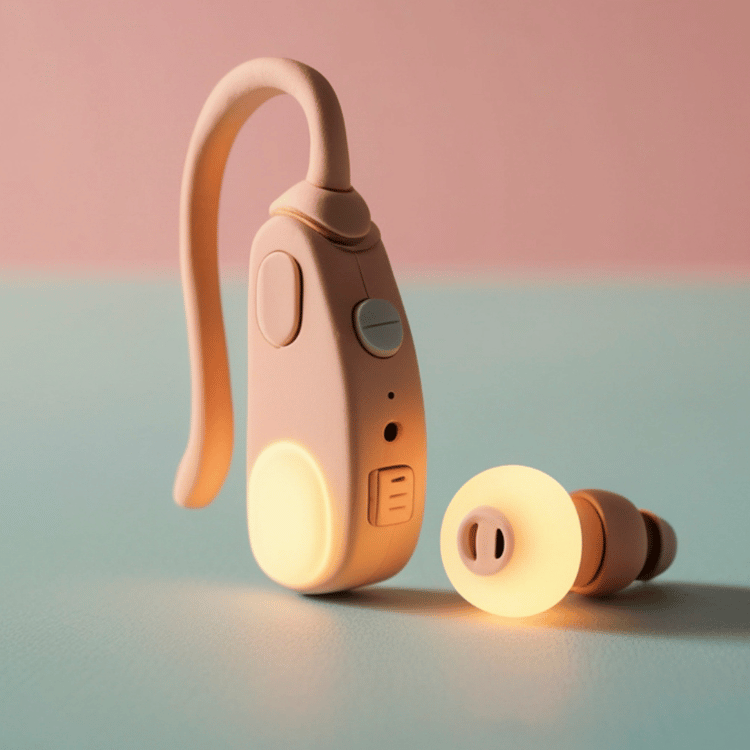


Recent prototypes like EarMeter have shown that earbuds can track continuous respiration volume without additional hardware. Another study confirmed that heart rate and breathing can be extracted simultaneously within the ear canal. And with Apple’s AirPods Pro 3 now pushing the ear firmly into multi-biometric territory, it’s clear the hearable category is maturing into something much bigger: ambient health sensing you forget you’re even wearing.
This innovation sits at the intersection of major macro shifts from connected digital health ecosystems to preventative health and AI-enabled passive biometrics. With strong alignment, high momentum signals and a natural path to mass adoption through existing consumer hardware, this one is shaping up to be a genuine Elevate Ninety Zone contender.
Foresight Index Scores
Adoption Potential: 80
Market Potential: 82
Longevity: 80
Innovation Uniqueness: 86
Macro Trend Alignment: 88
Foresight Index Score: 83 (Projected to rise to 87–89 as validation and commercial integration accelerate.)
Future Elevate Ninety Zone Potential: Yes
Reasoning: Strong consumer fit (no new device needed), aligns with the rapid expansion of wearable diagnostics, and benefits from the hardware scale of Apple and Samsung. Once validated clinically, continuous breath monitoring becomes a natural extension of hearables, likely elevating this into the 90+ zone.
Foresight Point of View: Where the Breath Intelligence Movement Is Heading
The signals are loud, the momentum is rising, and the direction of travel is unmistakable: breath is shifting from a forgotten vital sign to one of the richest real-time biomarkers in consumer and clinical health.
But what does that actually look like over the next 1, 3, 5 or 10 years?
Below is our foresight on how this niche will mature, grounded in the trends, technologies and behaviours shaping the breath intelligence stack.
Short Term (1–3 Years): The Age of Invisible Adoption
In the near term, breath intelligence won’t arrive with a big launch moment. Instead, it will quietly slip into the products we already use and move from niche to normalised. Not fully mainstream. But seeded everywhere.
Here’s what to expect:
1. Hearables get their first wave of “breath-aware” features.
We’ll see early integrations like:
- simple respiration tracking,
- breath-rate trends during workouts,
- recovery and readiness cues based on breathing variability,
- acoustic breath-intensity monitoring.
Nothing too clinical yet, but enough to normalise the idea that your earbuds can hear your breathing and turn it into insight.
2. Smartphone spirometry goes mainstream.
Tools like pDx and emerging software-only spirometry solutions will be adopted by:
- respiratory clinics,
- Long Covid programmes,
- insurers,
- digital health platforms.
Suddenly you won’t need a spirometer to understand your lung function, just your phone and 30 seconds of guided breathing.
3. AI breath coaching becomes a trusted health companion.
Driven by high validation rates in COPD and respiratory triage, expect:
- breath fingerprinting,
- AI-detected deviations from your baseline,
- early-warning notifications for acute respiratory events,
- stress and fatigue coaching based on micro-pattern shifts,
This phase is where breath intelligence shifts from “wellness add-on” to “health signal with clinical gravity.”
Mid Term (3–5 Years): Breath Becomes a Core Health & Fitness Biometric
This is when the category “tips.” Breath intelligence stops being a set of features and becomes a foundational biometric layer. Essentially, a metric that influences training, recovery, nutrition and everyday health decisions.
1. Hearables become legitimate respiratory wearables.
Validated accuracy leads to:
- respiration volume estimates,
- breath-depth variability,
- illness-onset detection thresholds,
- real-time lung performance scoring.
Your earbuds will become your early-warning system for fatigue, respiratory strain, infection onset and possibly metabolic shifts.
2. Breath + AI emerges as a diagnostic interface.
Artificial intelligence will be trained on:
- cough acoustics,
- airflow signatures,
- VOC clusters,
- multi-day breath patterning.
Expect FDA-cleared models for early detection of:
- pneumonia,
- COPD exacerbations,
- asthma events,
- post-viral deterioration,
- sleep-related respiratory instability.
Breath becomes part of the frontline digital triage system.
3. Breath enters the metabolic and nutritional mainstream.
Breath acetone and hydrogen metrics move from “biohacker toys” to validated nutritional markers:
- metabolic flexibility scoring,
- fat oxidation rate,
- microbiome fermentation signatures,
- personalised nutrition adjustments.
This unlocks the early stages of breath-based metabolic coaching.
4. Breath intelligence integrates into the daily health stack.
This is where we witnessed the journey from the early days of Spirometry to hearables to AI coaching and land at breath chemistry. At this stage, for the first time, we’ll see:
- longitudinal breath health dashboards,
- breath-based readiness scores,
- personalised training zones informed by ventilation,
- breath behaviour mapped to sleep quality, stress load and illness cycles.
Long Term (5–10 Years): The Breath Biome & Full-Stack Breath Intelligence
This is where the movement becomes truly transformational and Breath shifts from a signal to an intelligent system.
1. Breathomics unlocks molecular diagnostics at scale.
Breath VOC analysis moves from pilot studies to standardised clinical workflows. Expect breakthroughs in non-invasive detection of:
- metabolic dysfunction,
- inflammatory diseases,
- infectious diseases,
- early-stage cancers,
- microbiome-derived metabolites,
- organ-specific inflammatory markers.
Breath becomes the fourth pillar of sampling, alongside blood, saliva and stool.
2. Breath intelligence becomes continuous, ambient and personalised.
With mature hardware, AI and chemistry, breath becomes:
- an illness radar,
- a metabolic barometer,
- a performance lane marker,
- a stress-navigation tool,
- a behavioural feedback loop,
Your devices will proactively tell you:
- when your respiratory system is under strain,
- when your recovery is compromised,
- when your metabolism is shifting,
- when your inflammatory load rises,
- when your environment is affecting lung function,
It’s longitudinal, contextual and hyper-personal.
3. Unified “Breath Health” category emerges.
Similar to the evolution of gut health, we’ll see:
- breath health brands,
- breath-first diagnostics platforms,
- breath-aligned supplements & interventions,
- breath-centric training plans,
- breath performance coaching,
- “breath age” and “lung age” becoming consumer metrics.
The trends are indicating and moving towards a full new category within health and wellness.
4. Breath intelligence becomes a global preventative health tool.
When lower-cost sensors meet AI, respiratory monitoring becomes something that can be delivered at scale. Significantly, not just delivered in clinics, but across entire populations. This will influence:
- national respiratory health programmes,
- early detection for vulnerable populations,
- pandemic preparedness,
- chronic disease management,
Essentially, breath intelligence becomes infrastructure. When this stage is achieved, Breath becomes the most accessible, continuous, non-invasive health signal of the next decade, spanning behavioural, physiological and molecular layers.
The Big Picture
Across 1, 3, 5 and 10 years, the trajectory is clear:
Breath starts as a wellness trend. Then becomes a biometric. Then becomes a diagnostic. And eventually becomes an ecosystem.
The Breath Intelligence Movement isn’t hype. It’s a structural shift in how we understand the body, one inhale and exhale at a time.
The Takeaway
Breath is no longer just a tool for calming the mind, it’s becoming one of the most versatile, accessible and information-rich biomarkers in health. From earbuds to smartphones to molecular breathomics, the signals all point in one direction: the breath is shifting from background noise to a full-stack biomarker that will shape how we measure stress, performance, metabolic health and early disease detection.
The Breath Intelligence Movement is only just beginning, but its trajectory suggests it could become as culturally and commercially significant as the rise of gut health.
Founders & CEOs Takeaway
If your product, platform or category touches stress, recovery, respiratory health, fitness, or metabolic wellness, breath intelligence should now be firmly on your strategic radar. The infrastructure is already forming with hearables, AI models and at-home diagnostics where the winners will be those who integrate breath earlier than their competitors. The opportunity is not just a feature; it’s a new data layer that can differentiate entire product ecosystems.
Marketers Takeaway
Just as “gut health” became a cultural category by turning a complex system into something personal and actionable, “breath health” is next. The winning marketing play will be to frame breath not as a medical metric but as an empowering daily signal: a way to understand your body in real time, adapt your behaviour, and catch issues early.
The strongest brands will own this story by simplifying the science, reducing the stigma of respiratory issues, and showing that your next performance breakthrough, stress shift or health insight might start with something as simple (and human) as your breathing.
Innovators Takeaway
Breath intelligence is opening a rare frontier where the hardware, software and AI layers are all still being shaped. From passive sensing in earbuds and smartphones to software-only spirometry, breath-acoustic diagnostics and emerging breathomics.
Yet one major gap remains: the integration of breath with nutrition. Despite clear links between breath chemistry, metabolic flexibility, microbiome activity and nutrient utilisation, no dominant platform has connected breath data to personalised nutrition in a seamless, consumer-friendly way. The innovators who bridge this, unifying breath across fitness, recovery, respiratory health and metabolic guidance, will define the next generation of personalised health experiences.
Investors Takeaway
Breath intelligence sits at the convergence of several investable super-themes: preventative health, ambient diagnostics, AI triage, metabolic monitoring and the consumerisation of clinical tools. The category benefits from low hardware friction, strong macro trends, and broad cross-sector demand.
The earliest bets are likely to be the ‘enablers‘ of breath intelligence specialising in software-first platforms, AI breath analytics and clinical validation layers. Essentially, the ‘picks and shovels’ of the category poised for mass adoption.
Practitioner Takeaway
For clinicians, coaches and health practitioners, breath will become a far more actionable signal in everyday care. Expect better remote monitoring tools, AI-assisted triage, real-time coaching based on breathing patterns and new diagnostic layers coming from breath chemistry. This is not replacing your expertise, it’s giving you earlier visibility, tighter intervention windows and richer context about how your patients or clients are actually doing between appointments.
The practitioners that can combine frictionless monitoring, with AI and human expertise will be the winners in delivering forward looking and exceptional experiences for their patients or clients.