
Walking out of a contrast therapy centre, it made me think ‘what does recovery actually mean today?’ Just five years ago “recovery” meant a day off from training or a hectic schedule. Possibly a massage or spa day if I wanted to add some luxury time off or a foam roller routine if I was looking to recover from a heavy workout.
Back then, recovery sat quietly on the sidelines, something you earned after effort, rather than a vital part of the performance itself.
Fast-forward to today, and it feels like recovery has become part of daily rituals and is at the forefront of lifestyle design.
Recovery has woven itself into fitness, nutrition, mental wellbeing, even beauty. It’s less about how fast your muscles bounce back, and more about how intelligently your body and mind can restore energy, regenerate, and sustain performance. Recovery is becoming a unifying behaviour pattern. An emerging lifestyle category. And one of the most powerful early signals in the future of human health.
This week we explore the signals showing recovery transforming into one of the biggest behavioural systems in modern health.
What is Driving this Shift?
Recovery isn’t a “thing you do” anymore, it’s a lifestyle you live. Let’s take a look at the key trends that are behind this change in behaviour:
People Are Upgrading To Holistic Living
There has been a clear shift in how people think about their bodies. They are not separating fitness from stress or nutrition from mood anymore. Everything is connected. Recovery fits perfectly into this worldview because it makes people feel like they are regulating their entire system, not just stretching their hamstrings after a workout.
We Are Moving From Prevention To Prediction
Preventative health was the first step. Predictive health is the next leap. People want to know what is coming before it arrives. They want data that tells them when their system is under pressure, when inflammation is creeping up or when their recovery is trending in the wrong direction. Recovery is becoming a real signal in this new model. A drop in readiness is treated like an early warning sign that something is off.
Recovery Has Become A Biomarker In Its Own Right
Readiness, HRV, stress load, sleep depth and cognitive fatigue are no longer “nice to know” metrics. People treat them as core markers of their daily physiology. Recovery has quietly moved from the bottom of the dashboard to the top. When recovery becomes a biomarker, behaviour changes with it. People train differently. They eat differently. They rest differently.
Micro Restorative Rituals Have Become The New Self Care
The line between beauty, personal care and recovery is disappearing fast. People use cold rollers to calm inflammation. Red light panels for skin and energy restoration. Gua sha for lymphatic flow. Magnesium creams for relaxation. These are no longer “spa” add-ons. They are daily rituals. Small resets that keep people regulated throughout the day.
Amateur Elitism Has Changed Expectations Forever
The modern amateur athlete trains like the pros. They expect data, precision and tools that help them recover intelligently. They track load, fatigue, glucose, HRV and recovery scores. Not only that, they build recovery into their training plan and treat rest days like strategic interventions. Elite level recovery is no longer exclusive. It is becoming a consumer norm.
Energy Is Being Redefined
Energy used to mean caffeine, sugar and stimulants. The new version of energy is restorative. People want to feel sustained, calm and clear, not wired. They are switching to ingredients that support inflammation reduction, nervous system balance and circadian rhythm stability. This redefines “energy” from something you burn to something you rebuild.
Mental And Physical Recovery Have Merged
People see their mental health as part of their physiology now. Stress is not emotional. It is biological. Calm is not a luxury. It is a performance state. Tools like haptic calming wearables, brain training apps and neuroacoustic environments are becoming normal parts of people’s recovery routines. Mental regeneration is physical regeneration. The gap between the two has closed completely.
Nervous System Awareness Is Increasing
People understand their own signals better than ever. They know what dysregulation feels like, they know when they need to downshift and they know which rituals reset them. This literacy is why recovery is becoming a lifestyle system. Once people understand the how and why, recovery goes from optional to essential.
Signals We Are Tracking This Week:
Recovery is impacting various sectors, categories and behavioural signals, so below we’ve highlighted key signals that we are tracking that have gained visibility this week:
1. Recovery goes wearable and walkable
Sectors: Fitness & Exercise, Digital Health & Fitness, Personal Care
Relevant Foresight Index Innovations: Active heat + air-compression boots you can walk in; Connected Recovery Devices; Bio-Adaptive Compression; AI-Enhanced Compression Devices
- Signal: Hyperice’s Hyperboot – a Nike × Hyperice shoe that delivers Normatec-style dynamic air compression and heat while you move – has been pushed hard in 2025 Black Friday coverage, framed as an everyday recovery tool not just a post-race gadget.
- Why it matters (Foresight lens): This is recovery literally baked into footwear. High Adoption Potential (piggybacks on shoes), strong Macro-Trend alignment with amateur elitism and preventative health. It nudges recovery from “session after training” to “always on while you walk, commute and work.”
2. Smart rings are becoming always-on recovery hubs
Sectors: Digital Health & Fitness, Mental Wellbeing
Relevant Foresight Index Innovations: Smart Rings with Continuous Biometric Tracking; Continuous Biometric Tracking for Training Load & Recovery; Continuous Multi-Biomarker Monitoring Platforms
- Signal: Oura has launched a Blood Pressure Profile Study that uses ring signals to explore cuff-free hypertension detection, positioning the ring as a cardiovascular early-warning system, not just sleep tracker.
- Signal: Coverage in Vogue highlights Oura’s explosive growth among Gen Z women, tying the ring to hormonal health, stress, sleep and daily performance as part of an “always-on wellness” lifestyle.
- Why it matters: Rings are evolving into recovery command centres: sleep, strain, hormonal cycles, and (soon) blood pressure in one loop. That’s high Longevity and strong Innovation Uniqueness vs legacy wearables in our Foresight Index framing.
3. Sleep & circadian optimisation are becoming the recovery backbone
Sectors: Digital Health & Fitness, Mental Wellbeing, Medical / Pharma
Relevant Foresight Index Innovations: Wearable Sleep Biomarker Sensors; Precision Sleep & Circadian Optimisation Platforms; Circadian Nutraceuticals; Neuroacoustic & Binaural Sleep Modulation Devices
- Signal: A new market forecast projects sleep tracking and optimisation products growing from ~$3.7bn in 2025 to >$20.8bn by 2035, with wearables taking ~72% share and “personal sleep improvement” the core use-case.
- Signal: Separate analysis for wearable sleep trackers expects the category to keep expanding through 2035, with wearables dominating share as more consumers treat sleep tracking as standard.
- Why it matters: Sleep and circadian tools aren’t a niche “better pillow” play; they are becoming the central recovery system that everything else plugs into. In our proprietary Foresight index terms, that’s very strong Macro-Trend Alignment (burnout culture, ageing population, preventative health).
4. Multi-sensory mats and pods turn downtime into a designed recovery ritual
Sectors: Mental Wellbeing, Personal Care, Fitness & Exercise
Relevant Foresight Index Innovations: Neuroacoustic & Multi-Sensory Relaxation Devices; Multi-Sensory Recovery Chambers; VR Meditation Pods; Sensory-Driven Micro-Interventions
- Signal: Woojer Mat, a vibroacoustic mattress topper that turns audio into full-body vibration, launched with positioning around stress reduction, pain relief and deeper sleep, alongside entertainment.
- Why it matters: This is the “recovery room” becoming hardware you roll out at home. Short, sensory-driven sessions create micro-interventions woven into existing media habits (films, music, gaming), boosting Adoption Potential and Behavioural Fit vs traditional meditation apps.
5. Brain stimulation is edging toward long-term maintenance, not just crisis care
Sectors: Medical / Pharma, Mental Wellbeing, Digital Health & Fitness
Relevant Foresight Index Innovations: Non-Invasive Brain Stimulation; Home TMS Brain Stimulation Device
- Signal: BrainsWay’s Deep TMS just received FDA clearance as an adjunct therapy for major depressive disorder in adolescents 15–21, making it the first and only TMS device cleared across ages 15–86.
- Signal: Professional guidance from American Psychological Association (APA) Services flagged this expansion and framed TMS as an increasingly accessible option for treatment-resistant depression in younger populations.
- Why it matters: Regulatory momentum around non-invasive brain stimulation sets up a future where “mental recovery” includes periodic neuromodulation sessions, potentially at home. This scores high on Longevity and Market Potential if device costs fall and protocols become more “routine wellness” than “last resort.”
6. Metabolic tracking + AI nutrition turns food into a recovery dial
Sectors: Nutrition, Digital Health & Fitness, Metabolic Health
Relevant Foresight Index Innovations: Continuous Metabolic Tracking Platforms; AI Meal Plans from CGM Signals; Continuous Ketone Monitoring; AI-Formulated Nutrient Profiles
- Signal: A Levels × Season Health case study from October showed that members who engaged with dietitians on top of CGM insights more than doubled retention, suggesting continuous metabolic feedback plus coaching becomes a durable habit, not a novelty.
- Signal: The metabolic tracker patch market is forecast to more than double from roughly $2.1bn in 2025 to around $4.6bn by 2035, driven by wearable monitoring and biosensor advances.
- Signal: The CGM market itself is in robust growth, with recent analysis highlighting its use to guide diet and lifestyle, not just manage diabetes.
- Why it matters: Recovery becomes something you can “eat for” in real time: tweak carbs, timing and macros based on live metabolic feedback. That’s strong Adoption Leverage (uses familiar food behaviour) and a clearly aligned with the growing trend in metabolic health.
Other signals to note:
- Aescape raised $83M and is rolling out robotic massage pods with 3D sensing; now backed by Tom Brady as Chief Innovation Officer. Installations span Equinox, Four Seasons, and pro-team settings.
- RoboSculptor debuted its autonomous AI massage system in the U.S. this summer.
- Therabody added AI coaching inside its app ecosystem (“Coach by Therabody”), nudging home devices toward adaptive protocols.
Innovation Highlight: AI Powered Robotic Massage
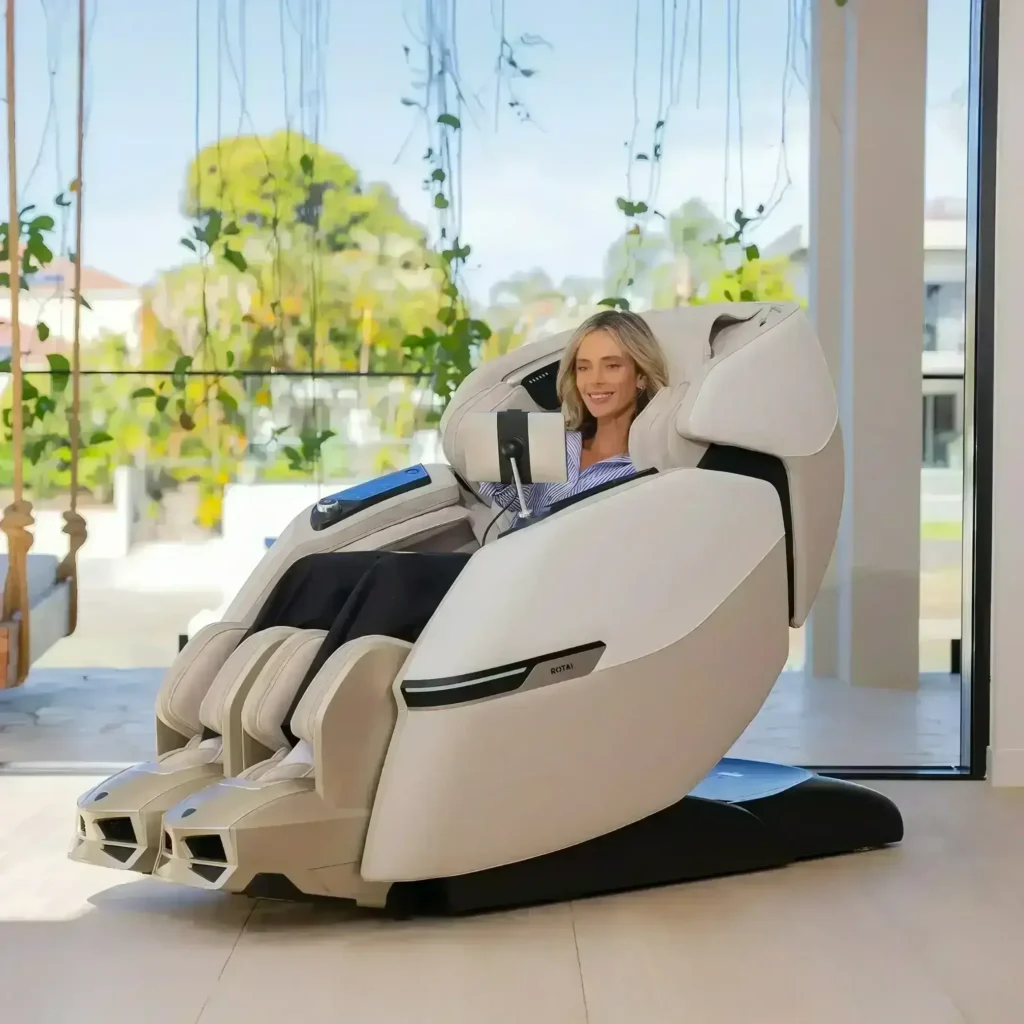
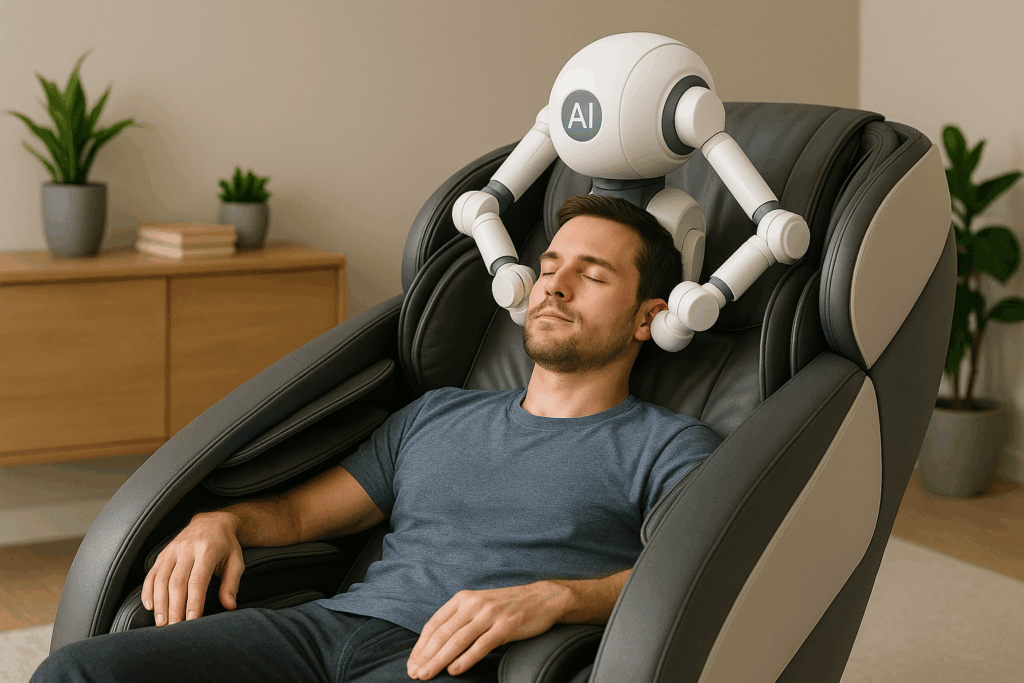
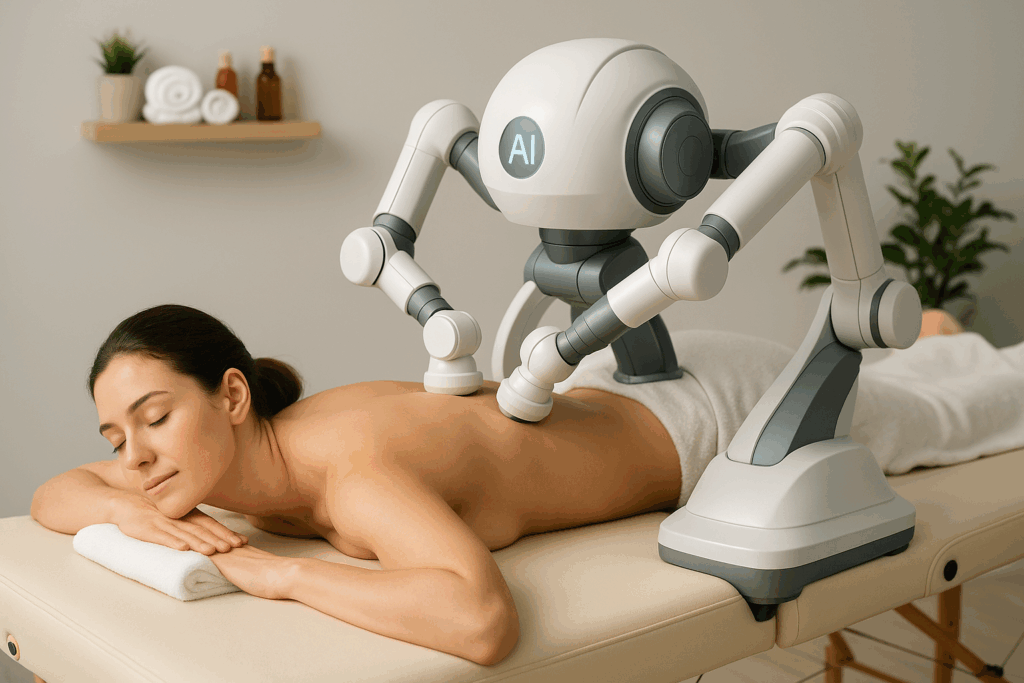
Aescape made a meaningful jump this week. It rolled out its AI powered robotic massage experience across more than 100 locations, showing real commercial scalability rather than another “wellness concept.” Add Tom Brady’s backing and you get instant cultural credibility in the sports world.
What makes it interesting is where it sits. It touches elite sport, amateur elitism, wellness, recovery and personal care all at once. It is a clean example of how these categories are converging into a unified recovery lifestyle.
The tension is clear though. The recovery market is crowded and massage is one of the last experiences where human touch still matters. The question is whether people will genuinely trade that for an automated, AI driven service.
Our take. It will land well with the health conscious and time poor who value convenience over ritual. But it is unlikely to reshape the category. Which is why it scores an 82 on the Foresight Index. Strong, but not in Elevate Ninety Zone territory.
Our foresight Index scores the Innovation across our 5 innovation factors (scores out of 100):
- Adoption Potential: 80
- Market Potential: 83
- Longevity: 82
- Innovation Uniqueness: 78
- Macro Trend Alignment: 86
Foresight Index Score = 82
Foresight Thought
The future of recovery is adaptive, integrated and personal. Recovery is no longer the quiet afterthought to performance, it’s becoming the performance itself.
In the short term, we’ll see recovery converge with self-care and beauty, as consumers blur the lines between physical regeneration, mental reset, and aesthetic restoration. The same tools used by elite athletes such as contrast therapy, breath regulation, micro-circulation tech are being reframed as daily rituals for the desk-bound, the time-poor, and the stressed.
The mid to long term, I see recovery evolving into an adaptive protocol, sitting at the core of personal health data ecosystems. Devices, wearables, and connected spaces will work together to sense physiological strain and automatically prescribe the optimal sequence in real time.
Longer term, I see the recovery market heading from a shift in isolated products to interconnected, intelligent systems that unify performance, holistic health, preventative care, and beauty self-maintenance.
The brands that will lead this next era won’t just help people bounce back, they’ll help them sustain equilibrium, turning recovery into the most human metric of modern wellbeing.
The Takeaway
A final thought for the week. Recovery is no longer a pause. It is becoming a protocol for living. As the tools get smarter and the data gets clearer people will design their lives around what restores them rather than what drains them. And that shift is only just beginning.
Founders and CEOs Takeaway
- Recovery is becoming a new behavioural category. Build offerings that integrate recovery into daily life, not just post-workout moments.
- Your consumers are shifting from “fixing problems” to “managing systems” to prevent problems arising. Products that support system regulation will win.
- Companies that merge performance, wellbeing and emotional stability into a single value proposition will gain long term relevance.
Marketers Takeaway
- Position recovery as empowerment, not escape. People want agency over how they feel.
- Lean into the language of regulation, readiness and system reset. This is where consumer attention is moving.
- Emotional and physiological benefits should be communicated together. This is where the category is converging.
Innovators Takeaway
- Build for micro rituals, not one off events. People want small interventions that create big regulation.
- Use data signals like readiness, HRV and stress load to trigger personalised recovery experiences.
- The next wave of innovation will merge mental and physical recovery. Think beyond single use cases.
Investors Takeaway
- Recovery is a cross category growth engine touching fitness, wellness, beauty, mental health and preventative medicine.
- Products that support nervous system regulation will see major adoption in the next 24 to 36 months.
- Watch for companies building predictive recovery tools. This will become a central layer in future health ecosystems.
Practitioners Takeaway
- Recovery is becoming a clinical conversation, not just a lifestyle choice. Patients expect guidance that blends physiology, stress, sleep and behavioural routines.
- Tools that support nervous system regulation, inflammation reduction and sleep quality will become core parts of treatment plans.
- Practitioners who integrate recovery data into their assessments will build stronger patient engagement and more personalised interventions.